When controlling critical humidity levels in industrial environments, the lowest initial price tag often leads to the highest operational costs. Here is why smart procurement looks beyond the sticker price.
Introduction
In the high-stakes world of industrial manufacturing—whether pharmaceuticals, food processing, lithium battery production, or cold storage—precise humidity control is not a luxury; it is an absolute necessity. When an engineer or facility manager determines the need for a desiccant dehumidifier to maintain critical dew points, the procurement process begins.
Almost immediately, you will encounter a wide spectrum of quotes. The temptation to choose the “budget-friendly” option is immense, especially when under pressure to reduce capital expenditure (CAPEX).
However, in the realm of industrial thermodynamics, there is rarely a “free lunch.” A significantly cheaper industrial desiccant dehumidifier usually achieves that price point by cutting corners that will impact your operation later. This post uncovers the uncomfortable truths behind “bargain” dehumidification and explains why analyzing Total Cost of Ownership (TCO) is the only viable strategy for B2B buyers.
The “Iceberg Illusion” in Industrial Equipment
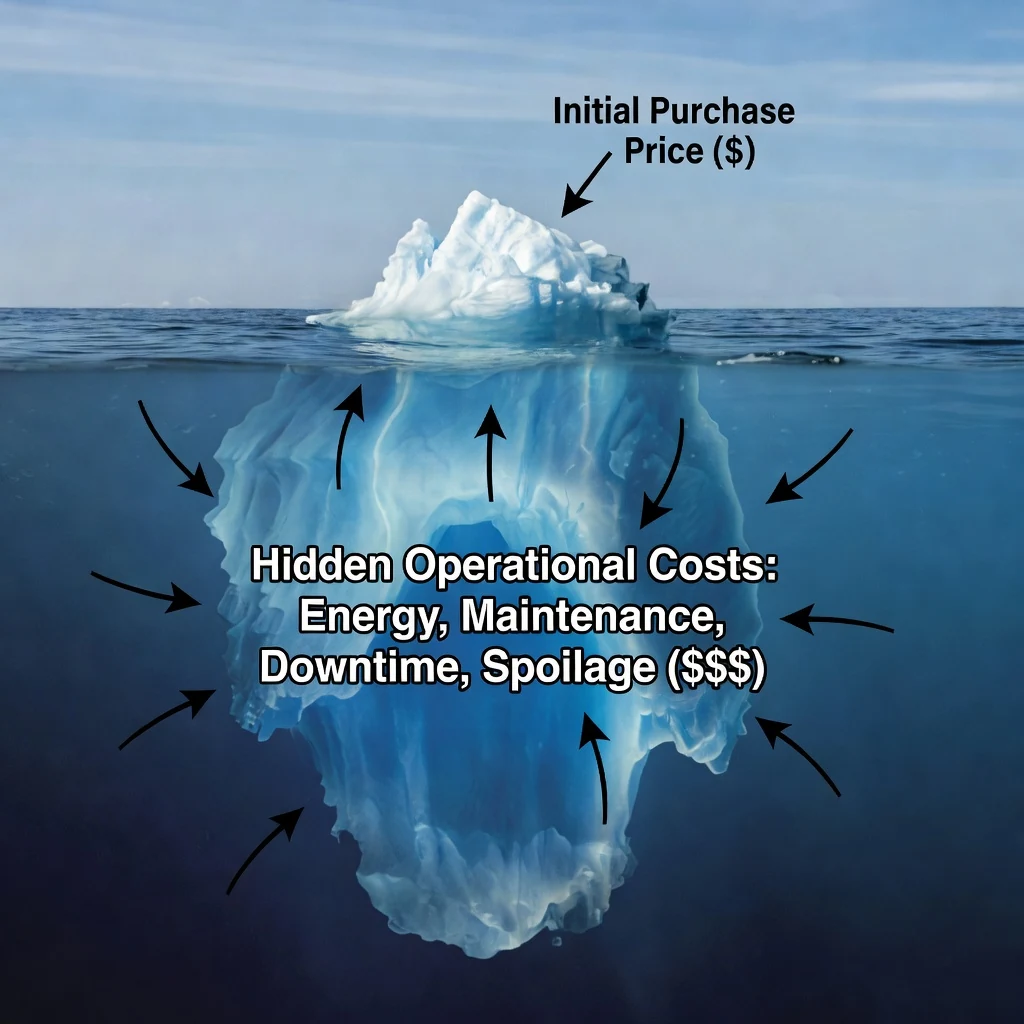
When buying complex machinery like a desiccant dehumidifier, the initial purchase price is just the tip of the iceberg—it’s the visible roughly 20% of the cost. The remaining 80% lies hidden beneath the surface in operational expenditure (OPEX), maintenance, and potential downtime.
A “cheap price” unit is almost always designed to win the bid today, not to perform efficiently tomorrow.
Where Do “Cheap” Manufacturers Cut Corners?
To offer a desiccant dehumidifier at a rock-bottom price, manufacturers must compromise on components and design. Here are the three most common areas of compromise and what they mean for your facility:
1. The Heart of the System: The Desiccant Rotor
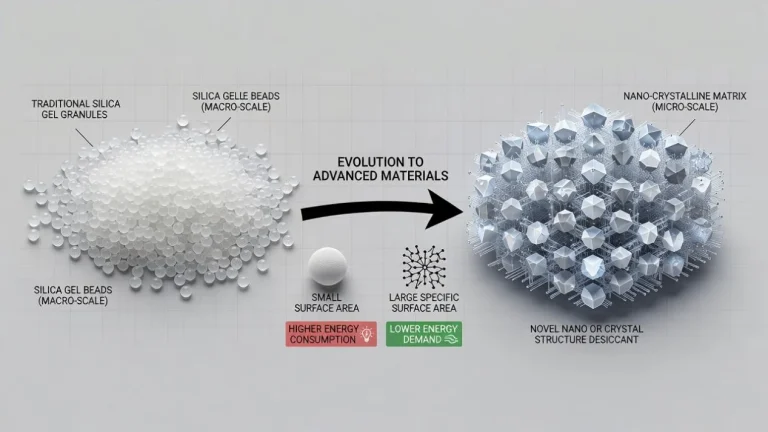
The performance of any desiccant dehumidifier relies entirely on the quality of its desiccant wheel (rotor). High-quality rotors use advanced silica gel or molecular sieve compounds chemically bonded to a robust ceramic matrix. They offer high adsorption capacities and last for many years.
The Cheap Alternative: Budget units often use generic rotors with lower quality desiccant materials, poor bonding agents, or insufficient depth.
The Result: The unit struggles to hit the required dew point, especially during humid summer months. The rotor degrades faster, necessitating expensive replacements much sooner than expected.
2. Casing and Build Quality
Industrial environments are harsh. Quality units are built with double-walled, insulated casings (often stainless steel) to prevent condensation sweating on the outside of the unit and to endure corrosive environments.
The Cheap Alternative: Thin, single-walled sheet metal with inadequate insulation and cheap seals.
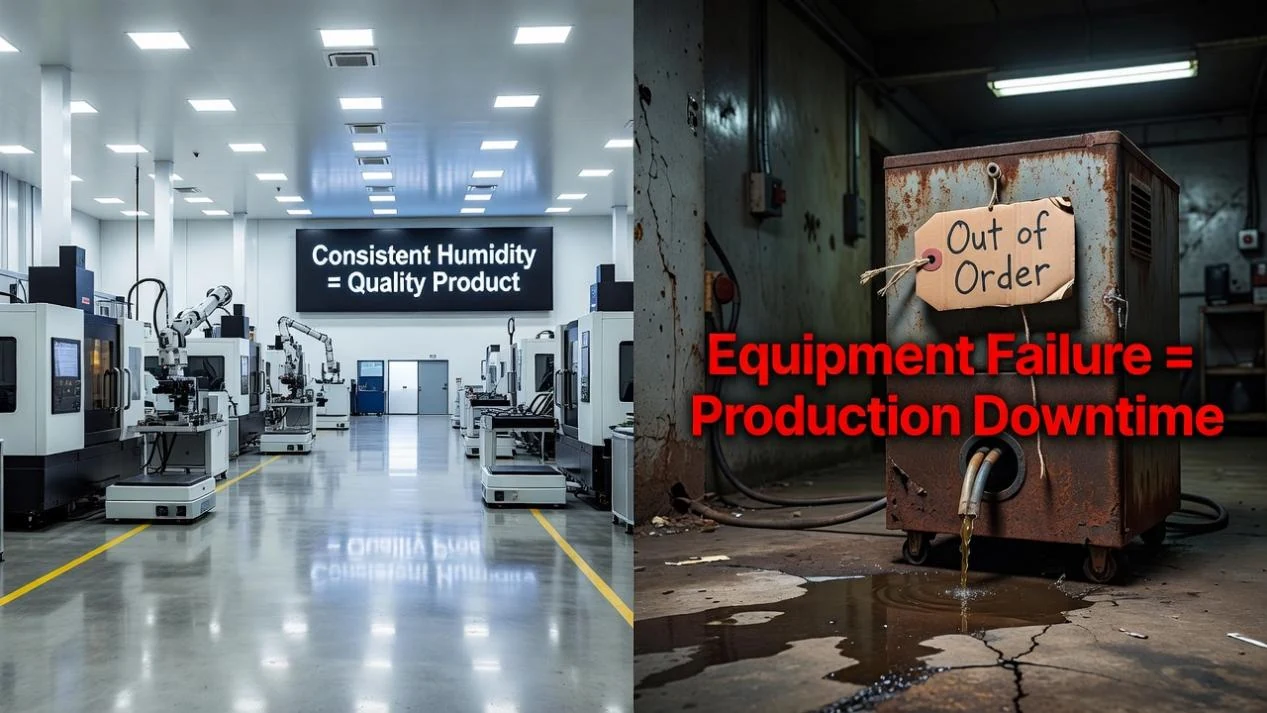
The Result: Energy loss through thermal bridging, air leakage, external sweating causing puddles on your facility floor, and rapid corrosion.
3. Controls and Energy Efficiency
Efficient dehumidification requires precise modulation of reactivation heat. Premium units use PLC controls with variable frequency drives (VFDs) and modulating heaters to use only the energy needed to match the current load.
The Cheap Alternative: Basic on/off controls or crude modulation. They often run reactivating heaters at full blast regardless of the actual demand.
The Result: Massive, unnecessary energy bills. A cheap unit can easily consume 30–50% more electricity or gas annually than a high-efficiency counterpart.
The Real-World Consequences of “Going Cheap”
What happens when that budget unit is installed on your production line?
1. Production Stoppages
If the cheap unit fails to maintain the required humidity (e.g., below 20% RH for certain powders), production must halt, or product quality will suffer. The cost of one day of downtime often exceeds the savings gained buying the cheaper unit.
2. The Maintenance Treadmill
Cheap components fail faster. You will find your maintenance team constantly replacing fans, contactors, seals, and eventually, the expensive rotor itself.
3.Energy Bill Shock
Desiccant dehumidification is energy-intensive by nature. An inefficient unit running 24/7 will bloat your utility costs significantly, erasing initial CAPEX savings usually within the first 12 to 18 months.
A Checklist for Smart B2B Buyers
To balance cost versus efficiency, shift your focus from “lowest price” to “best value.” When evaluating proposals, ask these critical questions:
What is the specific brand and model of the desiccant rotor? (Demand datasheets on rotor performance).
What is the moisture removal efficiency (kg/hr per kW of energy input)? (Compare the energy spend to do the same job).
Is the casing double-walled and insulated? (Check casing thickness and material).
What level of control modulation is included standard? (Avoid basic on/off reactivation).
Can you provide a 5-year Total Cost of Ownership (TCO) projection? (Reputable suppliers will happily model energy usage and maintenance costs for you).
Conclusion
An industrial desiccant dehumidifier is a critical infrastructure investment designed to protect your product and process for a decade or more. While the pressure to accept the lowest bid is real, selecting a “cheap” unit is often the most expensive decision a company can make in the long run.
Invest in efficiency, reliability, and robust engineering. Your production line—and your bottom line—will thank you.
Ready to analyze the true cost of humidity control for your facility?
Build the TCO model from documented operating hours, utility rates, maintenance requirements, control strategy, and process risk. Contact our engineering team to review the inputs required for a site-specific TCO assessment.