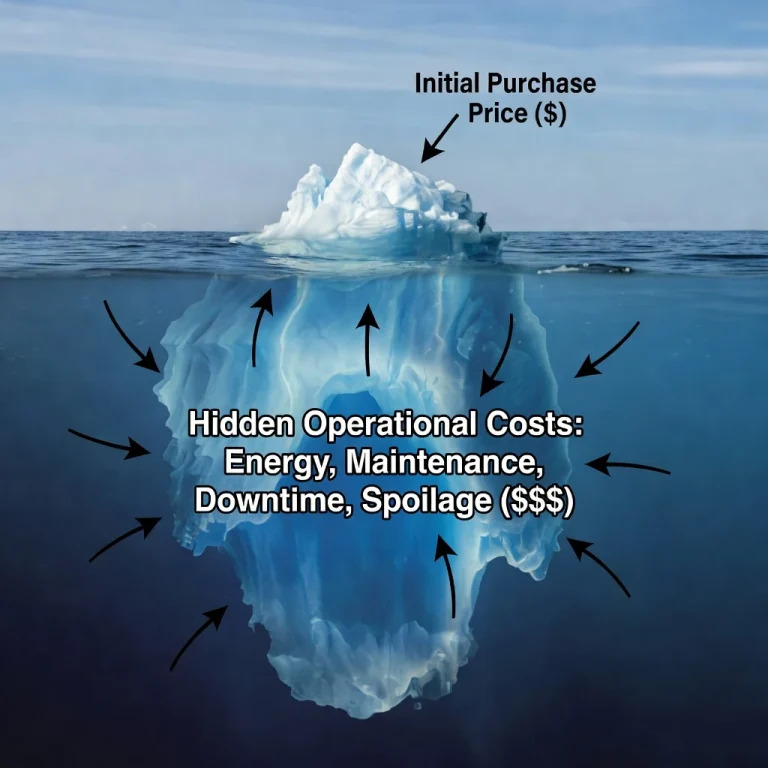
When procuring supplies for the military, disaster relief organizations, or large outdoor adventure companies, MREs (Meals, Ready-to-Eat) are often the go-to solution. They are long-lasting, high in calories, and easy to transport. However, for B2B buyers engaged in bulk procurement, MREs present a unique challenge: they typically do not have a standard “expiration date.”
The shelf life of MREs depends almost entirely on their storage conditions—primarily temperature. As a decision-maker responsible for procuring thousands or even tens of thousands of meals, how can you identify inventory that requires further inspection before release?
The answer lies in that unassuming red circular sticker on the MRE outer carton: the Fresh Check Indicator. A thorough understanding of this small tool is critical to maintaining the integrity of your supply chain and optimizing inventory management.
1. What Is the Fresh Check Indicator? (Understanding TTI Technology)
Although commonly referred to as a “freshness sticker,” its technical name is TTI (Time-Temperature Integrator).
Unlike traditional “best-by” labels, the TTI is not a calendar-based prediction tool. It is a science-based chemical device that visually records the cumulative temperature exposure a product has experienced over time.
Simply put, it is an irreversible chemical reactor. When exposed to temperatures above a specific threshold, the chemical substance at the center of the indicator gradually darkens. The higher the temperature, the faster the darkening occurs. It faithfully records every “thermal shock” this box of MREs has experienced since the moment it rolled off the production line.
Temperature and Shelf Life: A Dynamic Relationship
Understanding the TTI requires an understanding of the shelf life characteristics of MREs.
MREs are designed to withstand harsh environments, but they are not invincible. Research by the U.S. military shows that:
When stored at 27°C (80°F), the expected shelf life of an MRE is approximately 3 years.
If the temperature remains at 38°C (100°F), the shelf life may be drastically reduced to 6 months or even less.
Conversely, under refrigerated conditions, they can last much longer.
For B2B buyers, this means that if you do not know what your goods have been through before arriving at the warehouse, the so-called “nominal shelf life” is meaningless.
2. Strategic Implications for B2B Procurement
For professionals handling large volumes of goods, the Fresh Check Indicator is not just a food safety tool—it is a strategic supply chain management asset.
2.1 Verifying Supply Chain Integrity
In global logistics, even the most meticulously planned cold chain logistics can sometimes experience breaks in the chain. A crate of MREs might have been left exposed to the heat on a hot tarmac for hours, or spent several weeks in an un-air-conditioned container.
When the shipment arrives at your dock, the TTI serves as your sole “witness.” By inspecting the indicator, you can immediately determine whether this bulk procurement shipment has been subjected to unacceptable heat exposure during transit. This provides an objective basis for accepting or rejecting the shipment, effectively mitigating procurement risks.
2.2 Optimizing Inventory Management (Smarter Inventory Management)
When managing a warehouse with thousands of pallets, how do you decide which batch of goods to ship first? The traditional “First In, First Out” (FIFO) principle may not apply to MRE management.
With TTI, warehouse managers can implement a smarter “First Expired, First Out” (FEFO) strategy, where “expired” is determined by actual condition rather than date. Prioritize the use of inventory whose indicators show it is nearing the critical threshold, while reserving the inventory in the best condition for long-term strategic reserves. This refined approach to inventory management minimizes waste and saves significant costs.
3. Practical Guide: How to Read the Fresh Check Indicator
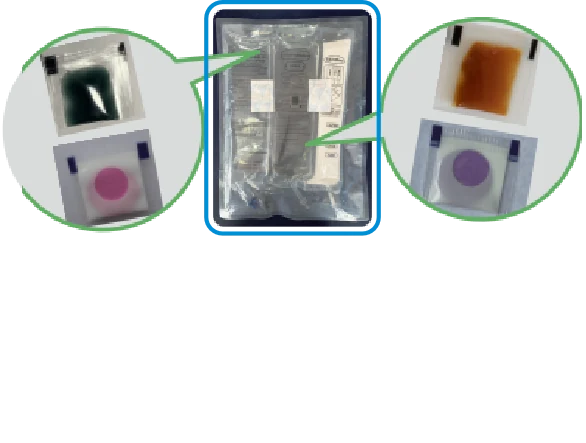
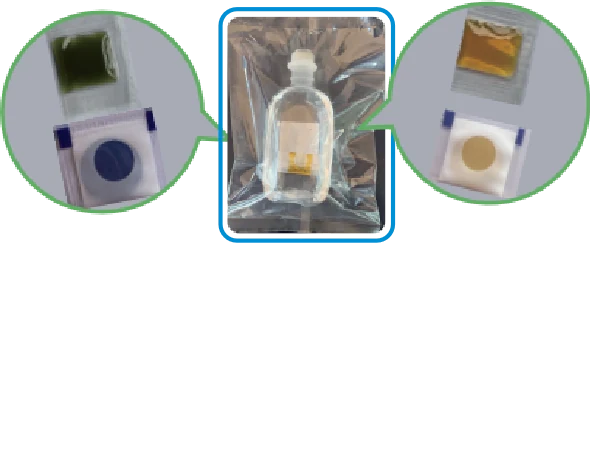
Reading the TTI is very intuitive; it typically consists of an outer ring and a central dot. You can think of it as a bullseye.
Fresh: The color of the central dot is noticeably lighter than that of the outer ring. This suggests the accumulated heat exposure remains within the indicator’s configured range; follow the product owner’s inspection and release procedure before use or continued storage.
Critical Condition (Warning): The color of the center dot is beginning to approach that of the outer ring. This indicates that the MRE’s remaining shelf life has been significantly reduced, and it should be consumed as soon as possible.
Spoiled (Expired/Compromised): The color of the center dot is the same as or darker than the outer ring. This indicates that the MRE has been exposed to excessive heat, may have spoiled, and should be discarded.
4. Conclusion
For B2B bulk buyers, the MRE Fresh Check Indicator (TTI) is a critical line of defense for ensuring a return on investment and end-user safety. It transforms invisible temperature history into visible decision-making data, helping you navigate complex logistics challenges and optimize inventory turnover.
When making your next bulk MRE purchase, be sure to focus not only on price and quantity, but also on leveraging this key tool to verify quality.
Use the indicator as one input within a documented receiving, inspection, and release process. It does not replace the product owner’s food-safety instructions or lot-specific records. Contact our team to discuss packaging and indicator requirements for your application.